
Restoration of Mira: Classic Dutch Yacht Reborn with Super B LiFePO₄ Marine Batteries
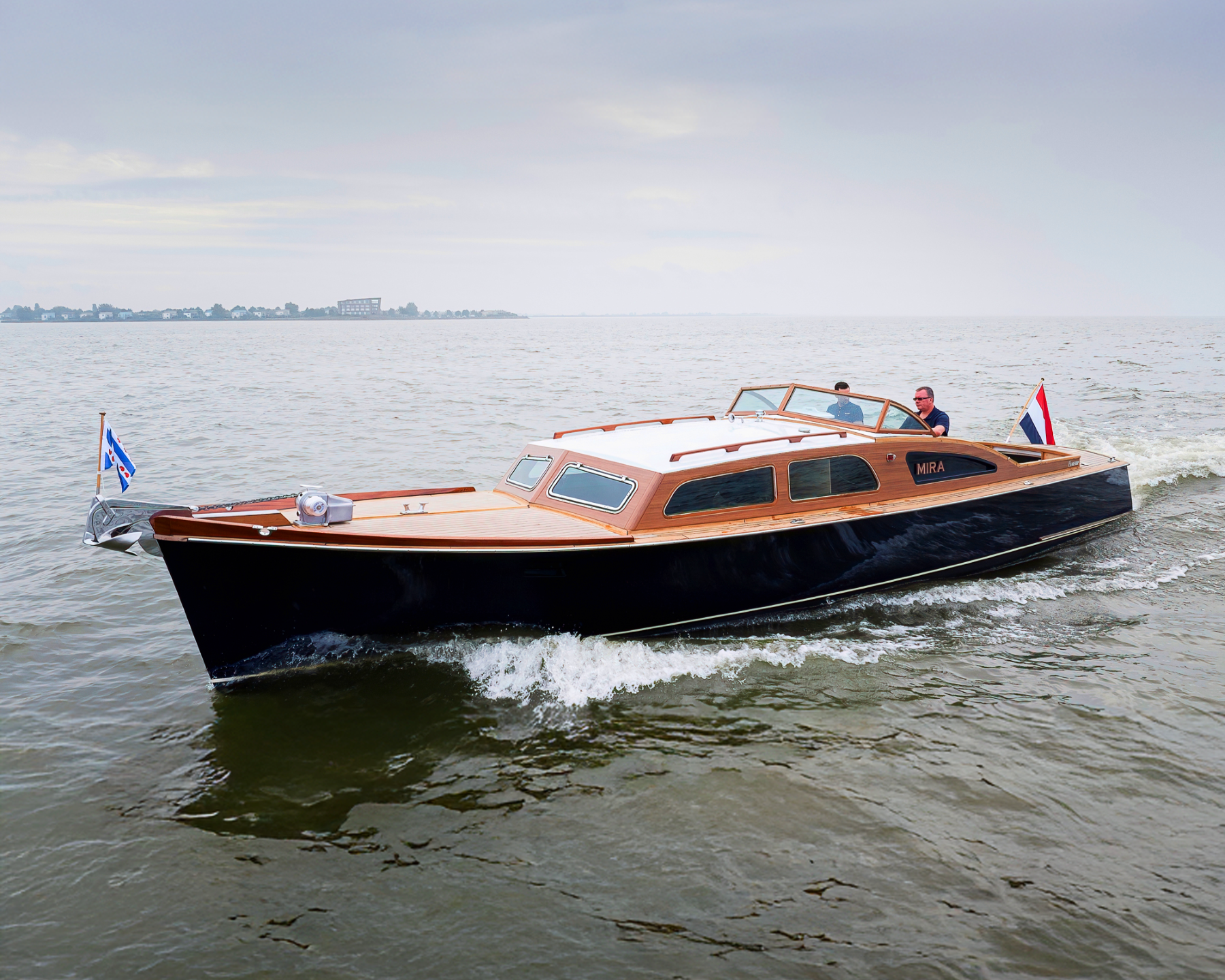
Restoration of Mira: A Classic Dutch Yacht Reborn with Electric Propulsion
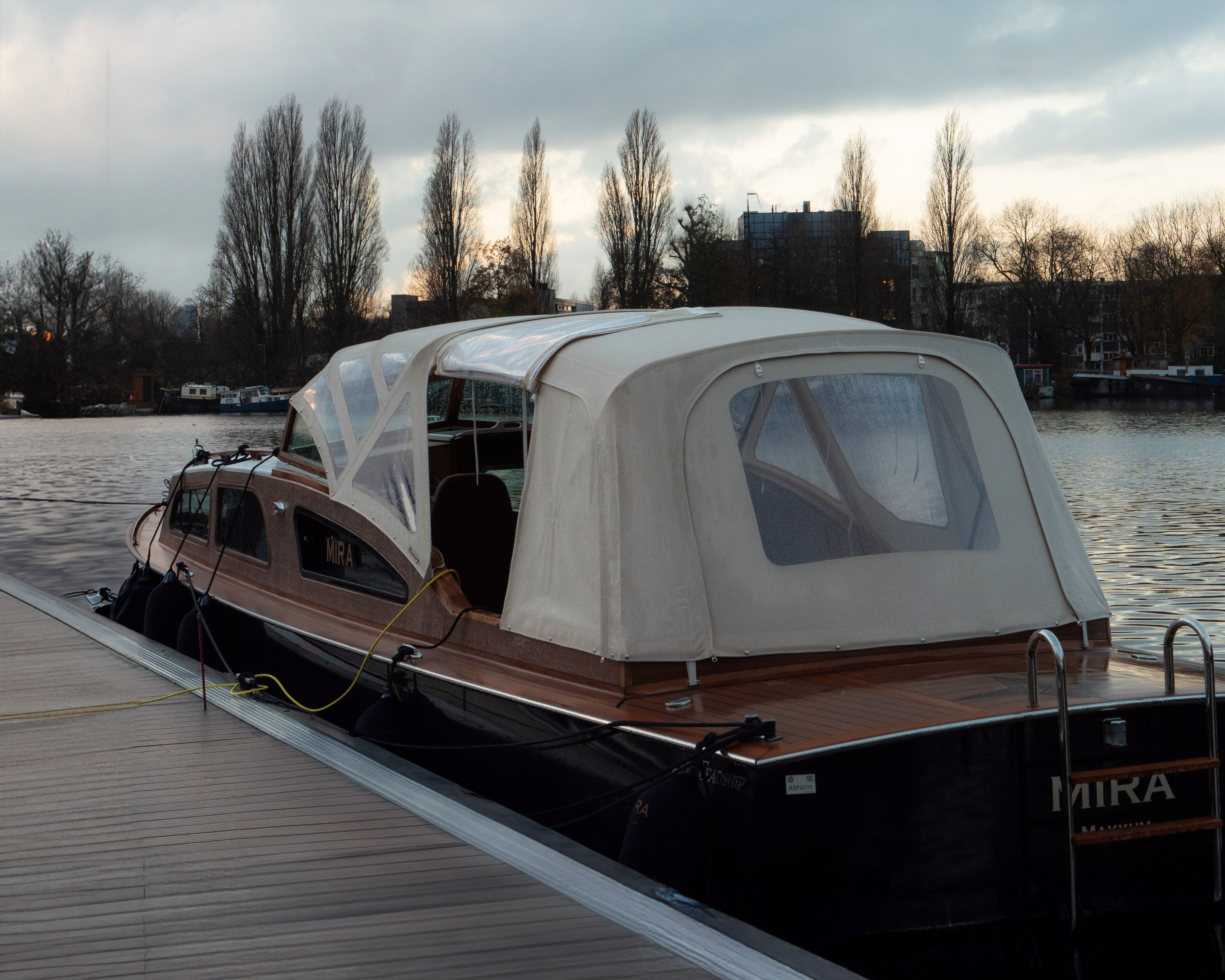
Mira is a timeless example of Dutch craftsmanship. Her restoration shows that history and innovation can unite. By combining traditional boat building with modern, sustainable technology, this classic Express Cruiser has been revived, upgraded, and electrified. Mira demonstrates what can be achieved by converting a boat to lithium batteries and modern propulsion.
What Is the History of Mira?
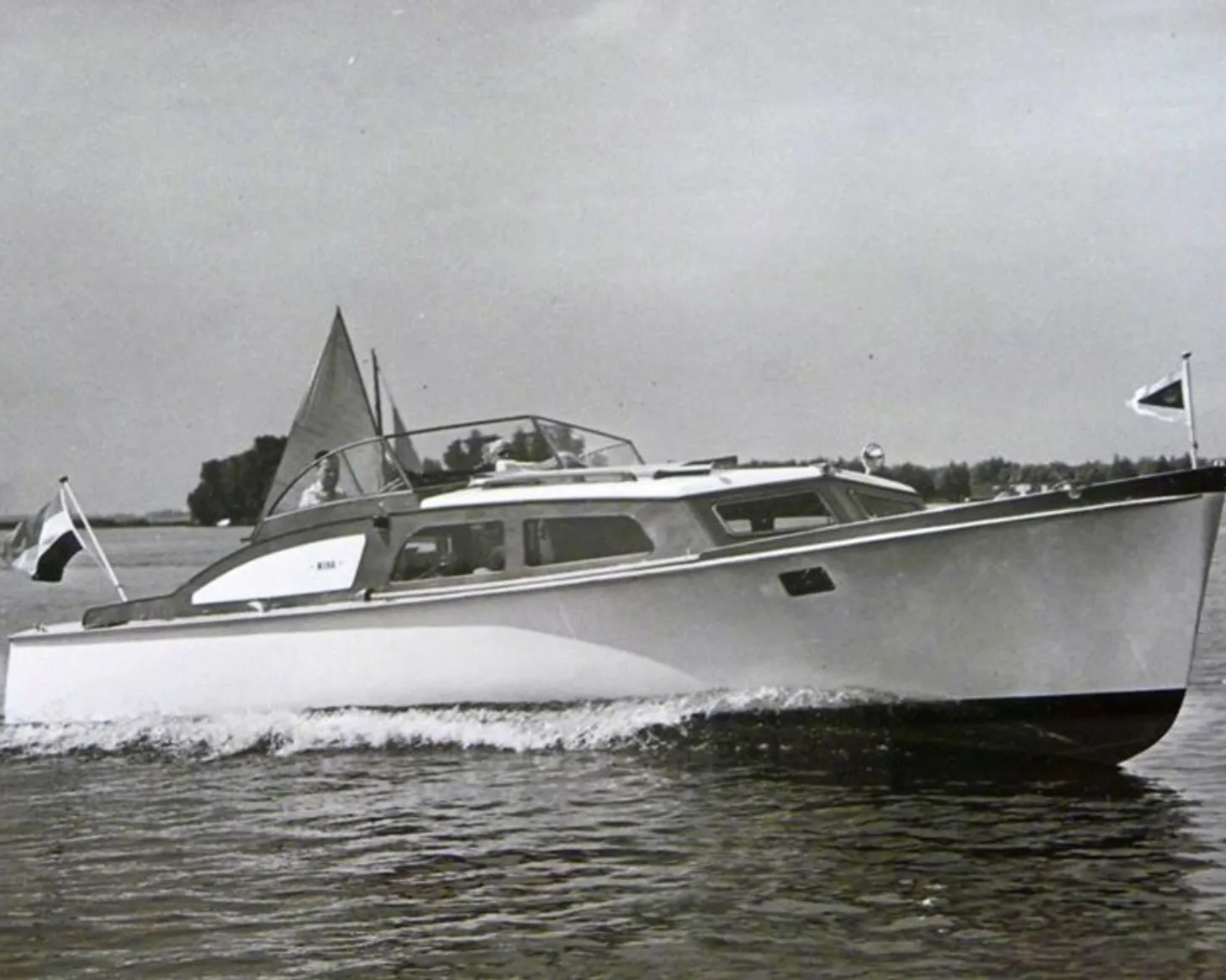
Mira’s story is just as impressive as her design. Her architect had made high-speedboats and naval vessels for the U.S. Navy during World War II. After the war,these advanced hull designs were used for leisure boats, leading to a new type of pleasure yacht called the Express Cruiser.
After the war, Europe placed high taxes on luxury goods to help pay for the reconstruction of the damaged areas. Because of this, Dutch shipyards looked for customers abroad, and the United States quickly became a key market for their luxury yachts.
When the shipyard needed a boat for the New York Motorboat Show but didn’t have one ready, a Dutch squire offered his yacht in return for a new one, Mira.
Many years later, Mira was discovered in the Netherlands, stored in a farmer’s shed and in rough shape. Most of her original parts were missing, but her sturdy hull and fine craftsmanship had stood the test of time.
Why Mira’s Restoration Matters
Mira is more than just a restoration; she stands as a real example of sustainability, craftsmanship, and innovation. Her structure is still solid after almost 75 years, which says a lot about her build.
However, like many old boats, her diesel engine could not be saved. Instead of repeating the past, the team at STOK-Electric gave Mira a new future with fully electric propulsion and marine lithium batteries, replacing the old lead-acid battery.
Why Choose Electric Propulsion for a Classic Boat?
“At the heart of the Mira lies a 60 kW electric motor, powered by a 75 kWh LiFePO₄ battery bank. This gives her a fully electric range of up to 135 kilometers and a top speed of 13 knots.”
- Berend Stokman, Co-Founder of STOK-Electric –
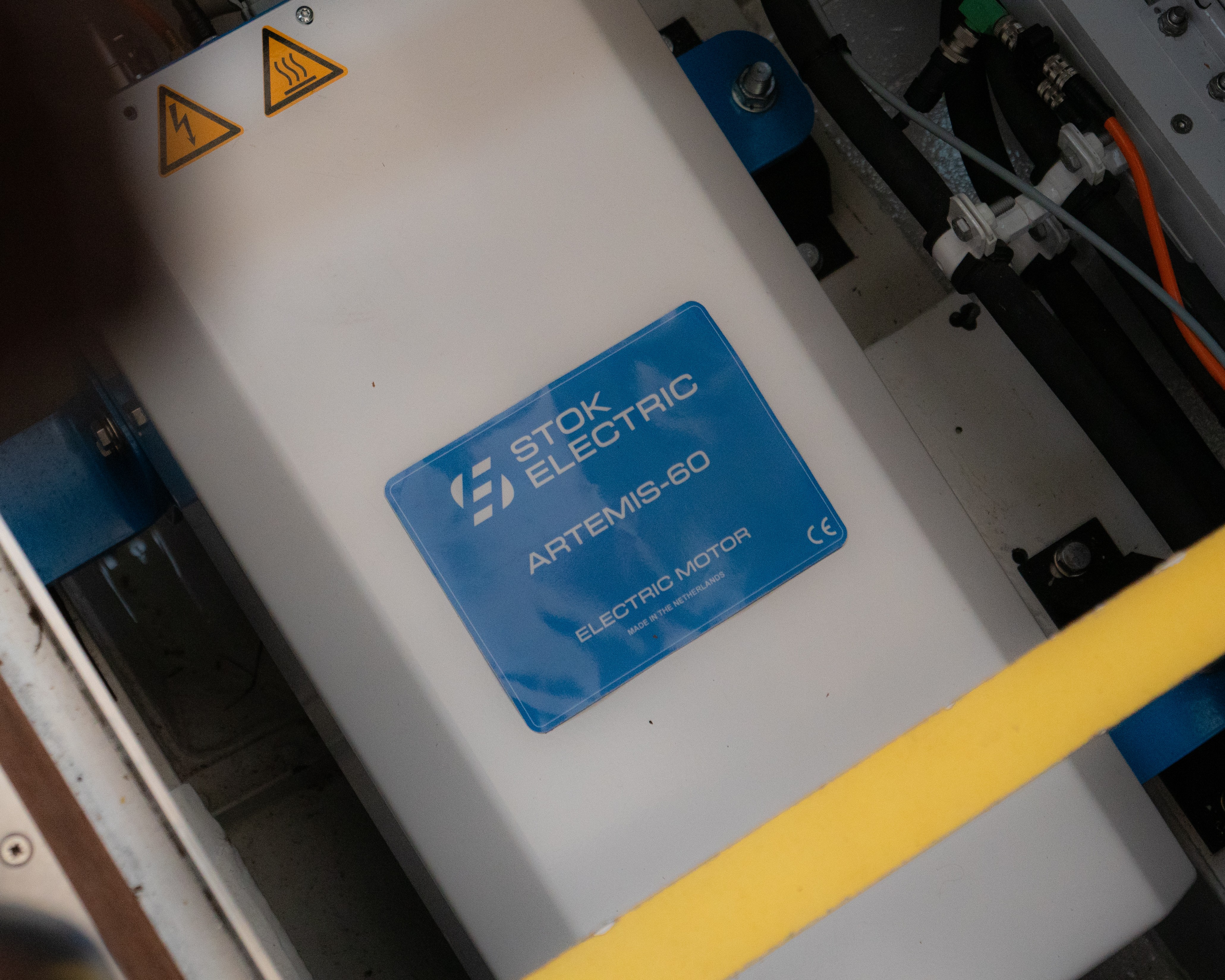
The teamchose a system voltage of 358V for a reason. Higher voltages allow for thinner cables, less weight, and less energy loss. They also make the system safer and lower the risk of overheating, which is a main cause of boat fires.
This makes Mira’s system more efficient and reliable, showing what installing lithium batteries in a boat can do.
Inside Mira’s Electric Heart
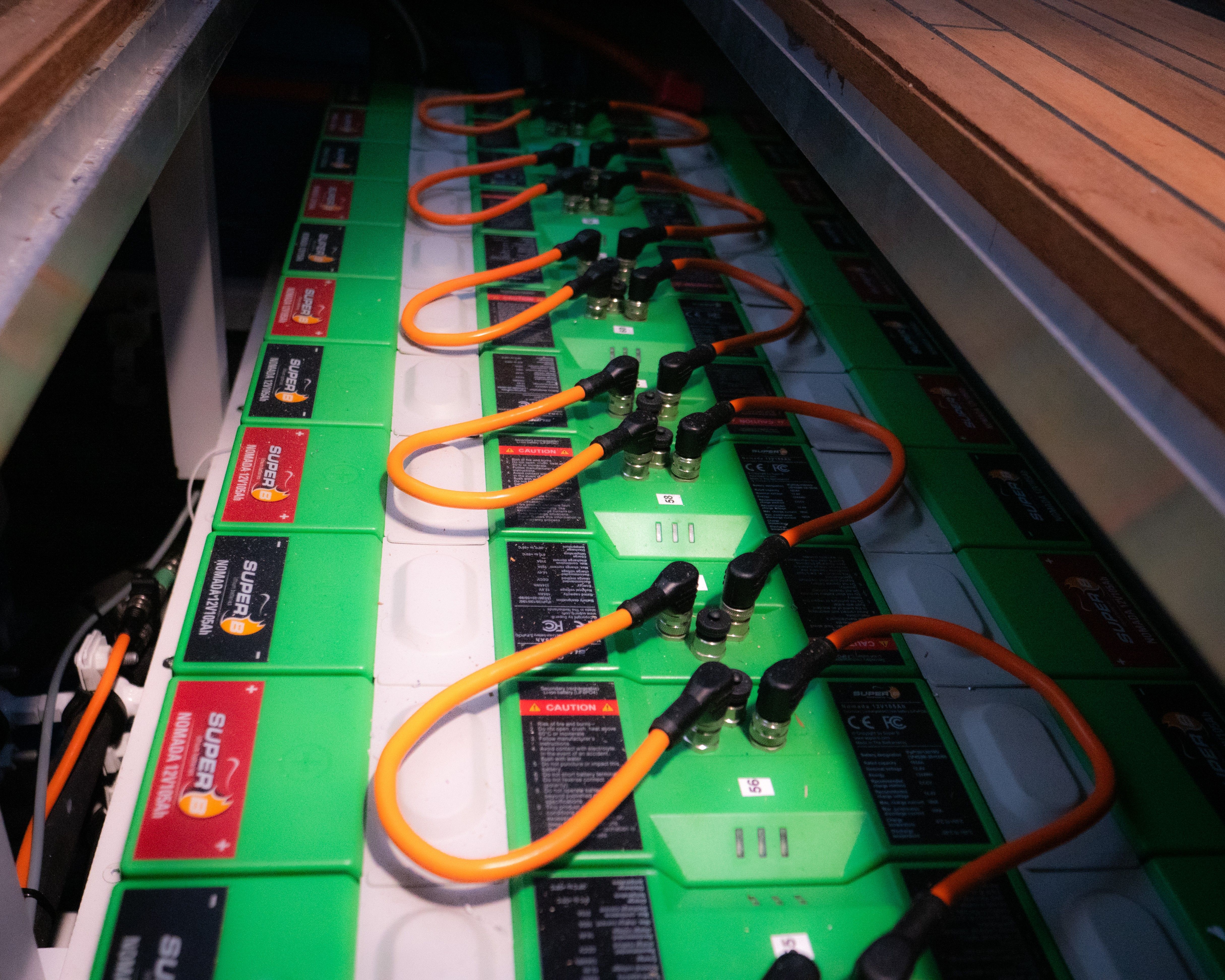
Beneath Mira’s restored wooden decks is a fully electric power system. STOK-Electric installed fifty-six Nomada 12V105Ah Super B LiFePO₄ marine batteries(28S2P), all linked through a Battery Interface Box (BIB), also known in the marine world as a Power Distribution Unit (PDU). This BIB, or PDU, facilitates the electrical installation in most hull designs, thereby removing the need for a custom solution. The two battery strings supply 358.4V and 37.6 kWh of clean power, allowing Mira to run quietly for hours.
Why Nomada Batteries?
When retrofitting a classic yacht, space, weight balance, and safety are essential. The Nomada 12V105Ah offers the following:
· Compact, lightweight design.
· Marine certifications (DNV, IEC 62619, IEC 62620, CE, UKCA, etc.).
· A flexible, modular architecture perfect for converting a boat to lithium batteries.
· The safest lithium chemistry (LiFePO₄), resistant to overheating and thermal runaway.
· IP66 protection against spray, salt, and moisture.
· Low weight (10 kg per module), benefiting stability in narrow hulls.
Nomada batteries deliver over 3,500 full cycles at 100% Depth of Discharge (DoD), low self-discharge, fast charging, and high energy density. They give modern electric boats the long, quiet cruising they need.
Each battery includes a built-in BMS with CAN communication. With NMEA2000 integration, Mira’s crew can monitor battery health directly on the Raymarine plotter. These marine lithium batteries do more than just power Mira. They also represent the future of sustainable boating.
Smart Power Management and Safety Systems
Mira’s electrical system shows thoughtful marine engineering. At its core is STOK-Electric’s PDU-500, a compact intelligence hub designed for high-voltage electric propulsion systems up to 500V, ideal for modern electrified vessels.
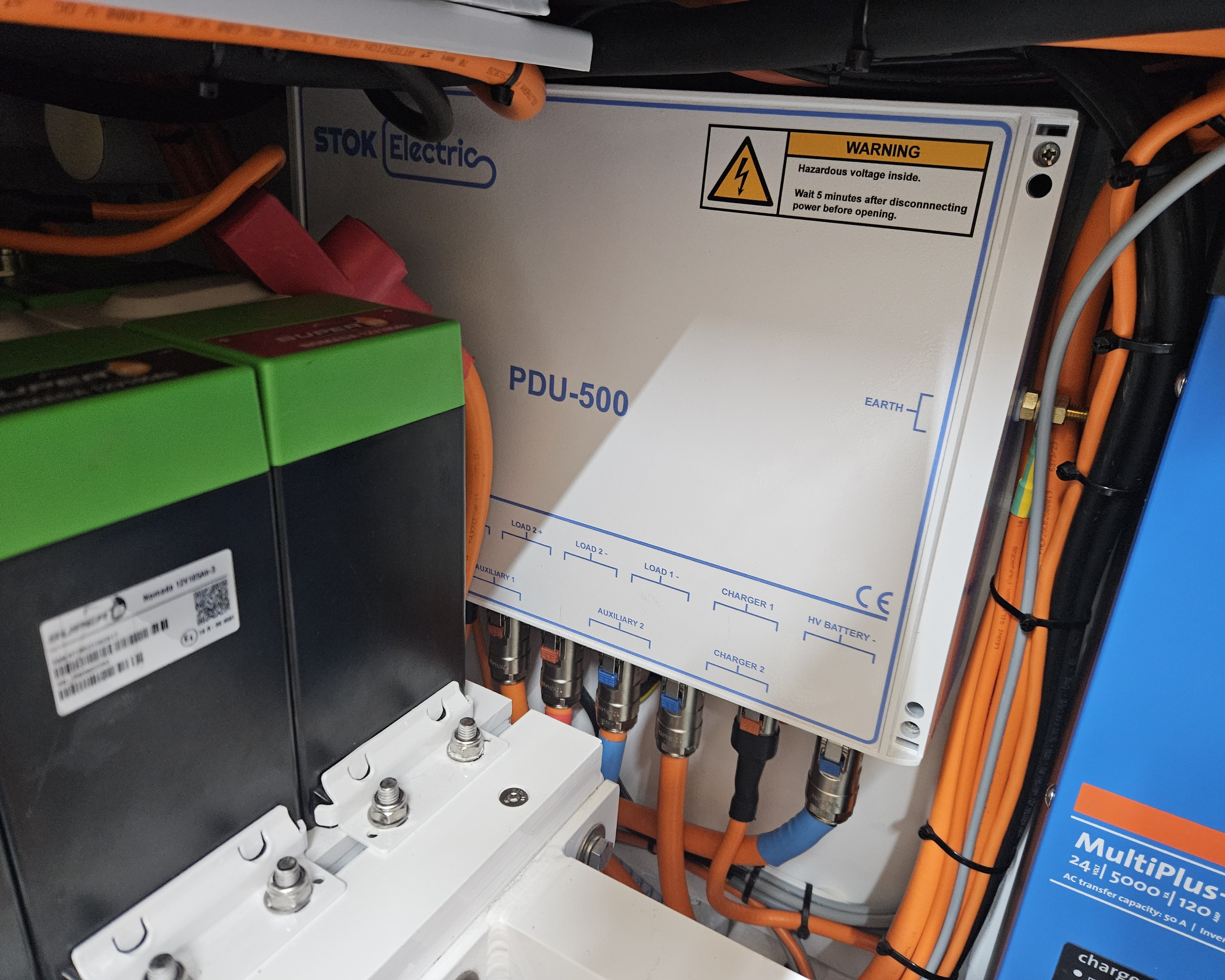
Inside the PDU:
· Isolation monitoring.
· Safety relays on every power line.
· Master BMS for full system control.
· Real-time communication between all components.
· Pre-chargecircuit for smooth start-up.
· Dualpower outputs (up to 300A continuous).
· Two charging ports (60A & 95A).
· High-Voltage Interlock (HVI) for critical safety.
Through NMEA2000, the PDU shares real-time system data directly with the onboard Raymarine display, seamlessly merging modern electronics with Mira’s classic character.
Balancing Modern Tech with Classic Design
Restoring Mira required honoring her character while integrating advanced electrical systems.
“With limited space and irregular dimensions, the challenge was to keep everything clean, compact, and intuitive.”
- Berend Stokman, STOK-Electric -
To protect navigation and communication equipment, STOK-Electric used shielded cabling, carefully planned routing, and an integrated EMC filter, essential steps when installing lithium batteries in a boat or upgrading a vintage yacht to electric propulsion.
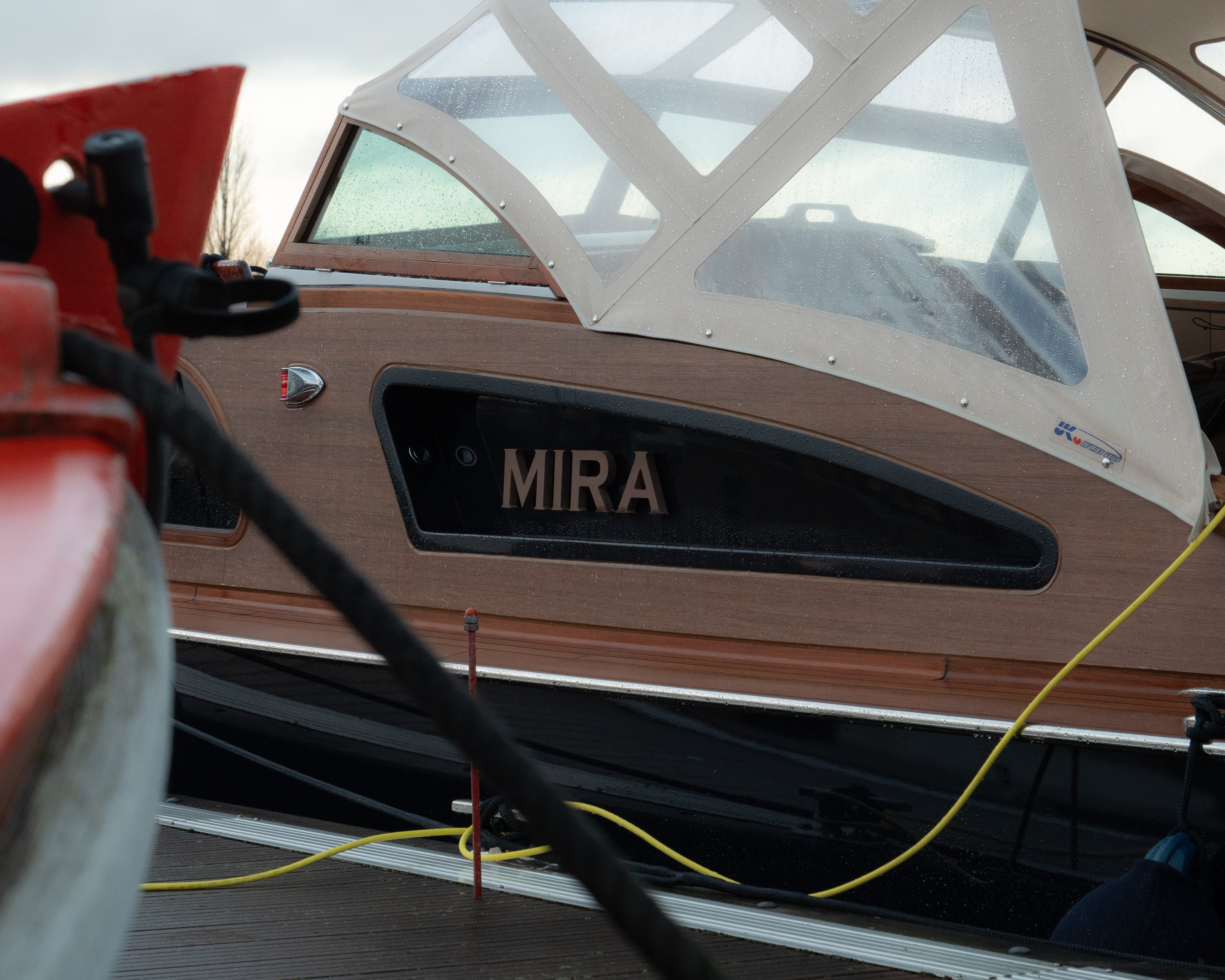
Why Mira Represents the Future of Classic Boating
Mira’s restoration is more than a nostalgic revival; it shows how classic yachts can use sustainable, long-lasting technology. Her transformation is part of a growing trend toward lithium marine batteries, electric propulsion, and responsible restorations that extend a boat’s life without changing its character.
Mira’s journey from a forgotten shed to a fully electric masterpiece shows what’s possible when tradition and innovation work together.
Watch the Full Story
Interested in learning more about the full restoration and how electric propulsion changed Mira’s future?
Watch the behind-the-scenes video explaining everything from battery installation to space optimization:
Watch the Mira Restoration on YouTube
Frequently Asked Questions About Marine Lithium Batteries & Electric Boat Upgrades
1. What are the benefits of installing lithium batteries in a boat?
Installing lithium batteries in a boat provides higher energy density, lower weight, faster charging, and longer lifespan compared to traditional lead-acid batteries. They are ideal for electric propulsion systems and modern onboard electronics.
2. Can I replace a lead-acid battery with a lithium battery on my boat?
Yes. Many boat owners now replace lead-acid batteries with lithium batteries to improve performance and safety. Just make sure there is proper BMS integration and that the battery is compatible with your charging system.
3. Are Super B lithium marine batteries safe for yachts and sailboats?
Absolutely. Super B LiFePO₄ batteries such as Nomada 12V105Ah, Nomia 12V210Ah and Nomia 12V340Ah use the safest lithium chemistry, include an integrated BMS, and carry marine certifications. They are engineered specifically for marine lithium battery applications.
4. What makes LiFePO₄ ideal for electric boat conversions?
LiFePO₄ batteries are stable, non-flammable, long-lasting, and offer consistent performance. For projects like Mira’s restoration, they provide the reliability needed to convert a boat to lithium batteries.
5. How long do marine lithium batteries last?
A high-quality lithium marine battery typically lasts between 3,000 and 5,000 cycles, depending on the discharging habits and battery type. Super B batteries offer long cycle life with minimal self-discharge, ideal for boating seasons.
· Nomada 12V105Ah >3.500 cycles at 100% DoD
· Nomia 12V210Ah >3.500cycles at 100% DoD
· Nomia 12V 340Ah >4.000cycles at 100% DoD
(*The life cycles may vary depending on the user's habits. Things that may affect the lifespan are: Operating temperature, charge and discharge current (c-rate), depth of discharge (DoD), state of charge (SoC), thermal cycling, cooling and ventilation, humidity and moisture exposure, overvoltage and undervoltage exposure, etc... These previously mentioned estimates are based on 100% DoD at 25 degrees Celsius.)
.avif)


