
GT3 Batteries
Race‑winning power and extreme lightness. Built to meet the demands of GT3 competition and high‑performance track cars.

Why Standard Batteries Hold Back GT3 Cars
GT3 race cars are precision machines. Heavy, conventional batteries undermine that precision with excess weight, slow cranking, and voltage sag. They heat up under continuous load, vibrate apart over kerbs and bumps, and simply can’t supply the power needed for high‑compression engines and complex electronics. Unreliable starts, long pit‑stop recharge times, and premature battery failure cost you laps and confidence. To compete at the front, a GT3 car needs a battery engineered specifically for racing.
The GT3 Advantage

High Cranking Power
Delivers up to three times the cranking amps of typical lead‑acid batteries for instant ignition and quick pit‑lane restarts.

Flat Discharge Curve
Maintains steady voltage throughout long stints, keeping ECUs, pumps, lights and radios running at peak efficiency.

Deep Reserve Capacity
Provides enough energy to power fans, coolers, data loggers and lights during endurance runs without voltage sag.

Ultra‑Lightweight
Advanced lithium construction slashes weight by 70–80 % compared to lead batteries, improving handling and reducing stress on suspension.

Vibration‑Proof & Safe
Robust, impact‑resistant housings and non‑spillable LiFePO₄ chemistry withstand high G‑forces and harsh track conditions while eliminating leaks and fumes.

Fast Recharge
Low internal resistance means a quick top‑up in the pits—full charge can be restored in about an hour with the right charger.

Long Service Life
Designed for thousands of cycles and up to 10 years of service, cutting replacement costs and downtime.
Choose the Right Battery for Your GT3 Car
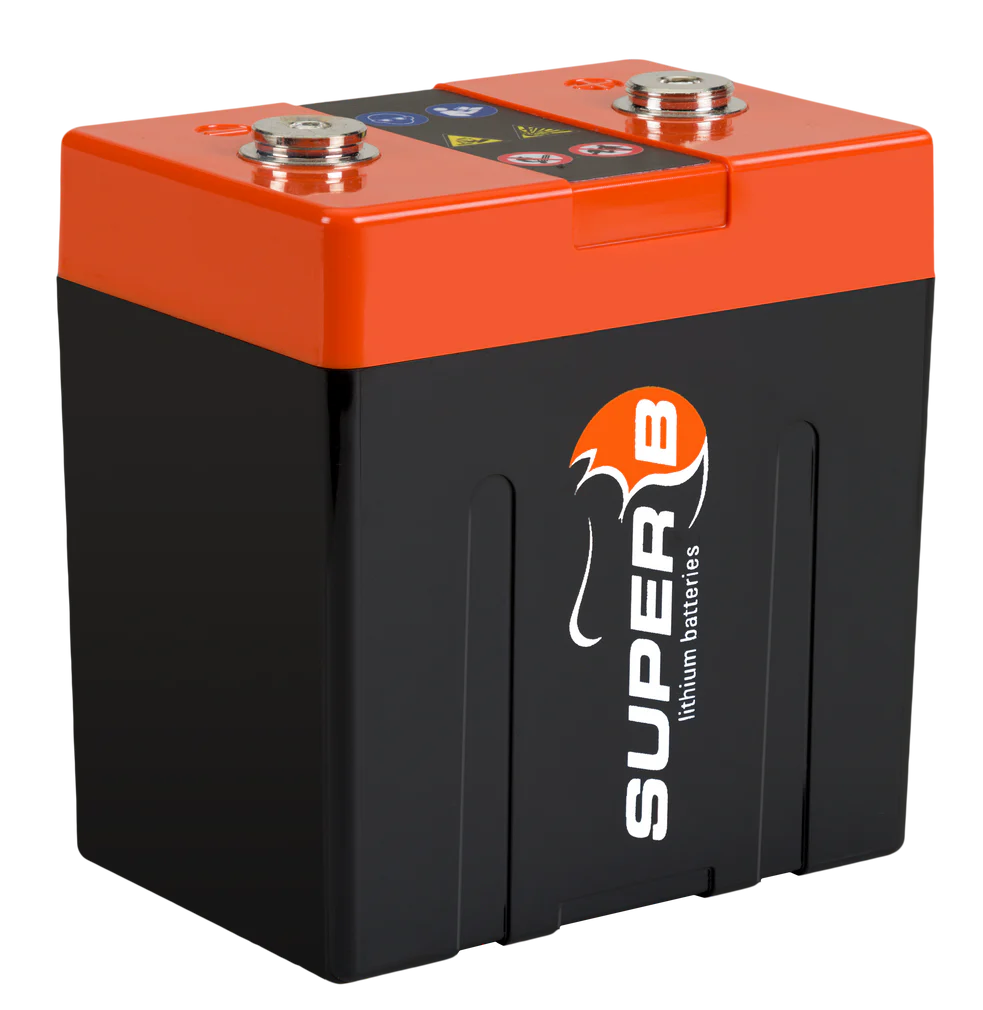
Andrena 12 V 10 Ah
A compact, high‑power battery for GT3 cars with 1.6–2.0 L engines. Ideal for sprint races and minimal accessory loads.
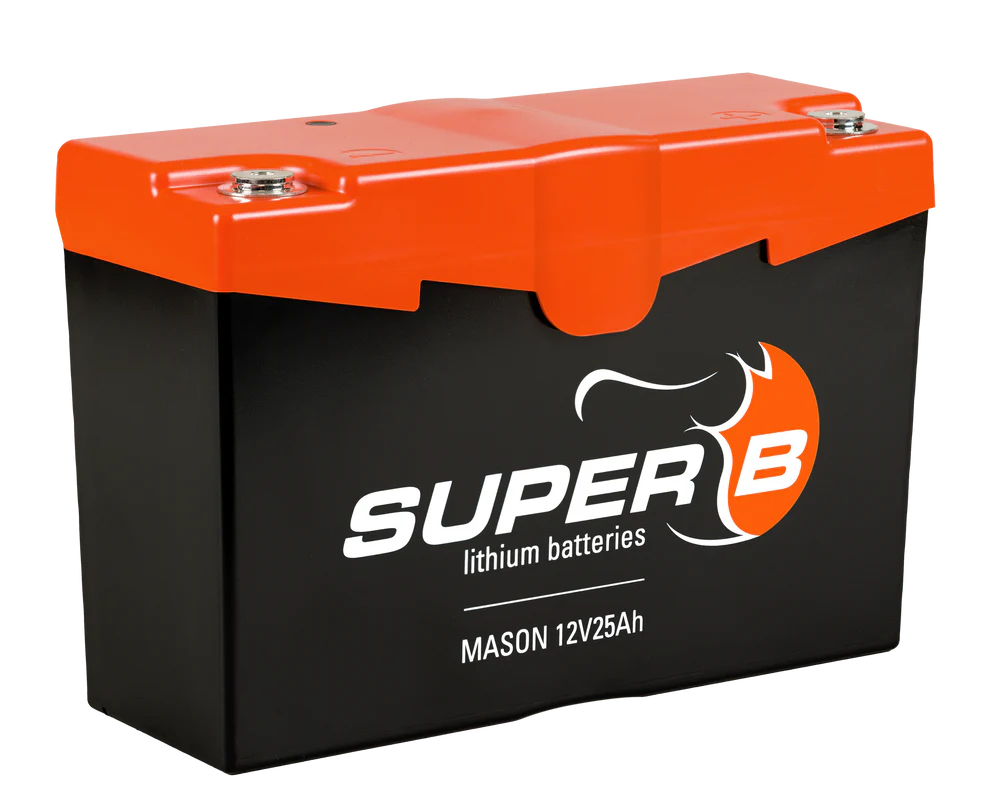
mason 12v20ah (with BMS)
Offers the same power as the Andrena 20 Ah but with integrated BMS for cell balancing and added protection. Ideal for teams prioritising safety and deep‑discharge resilience.
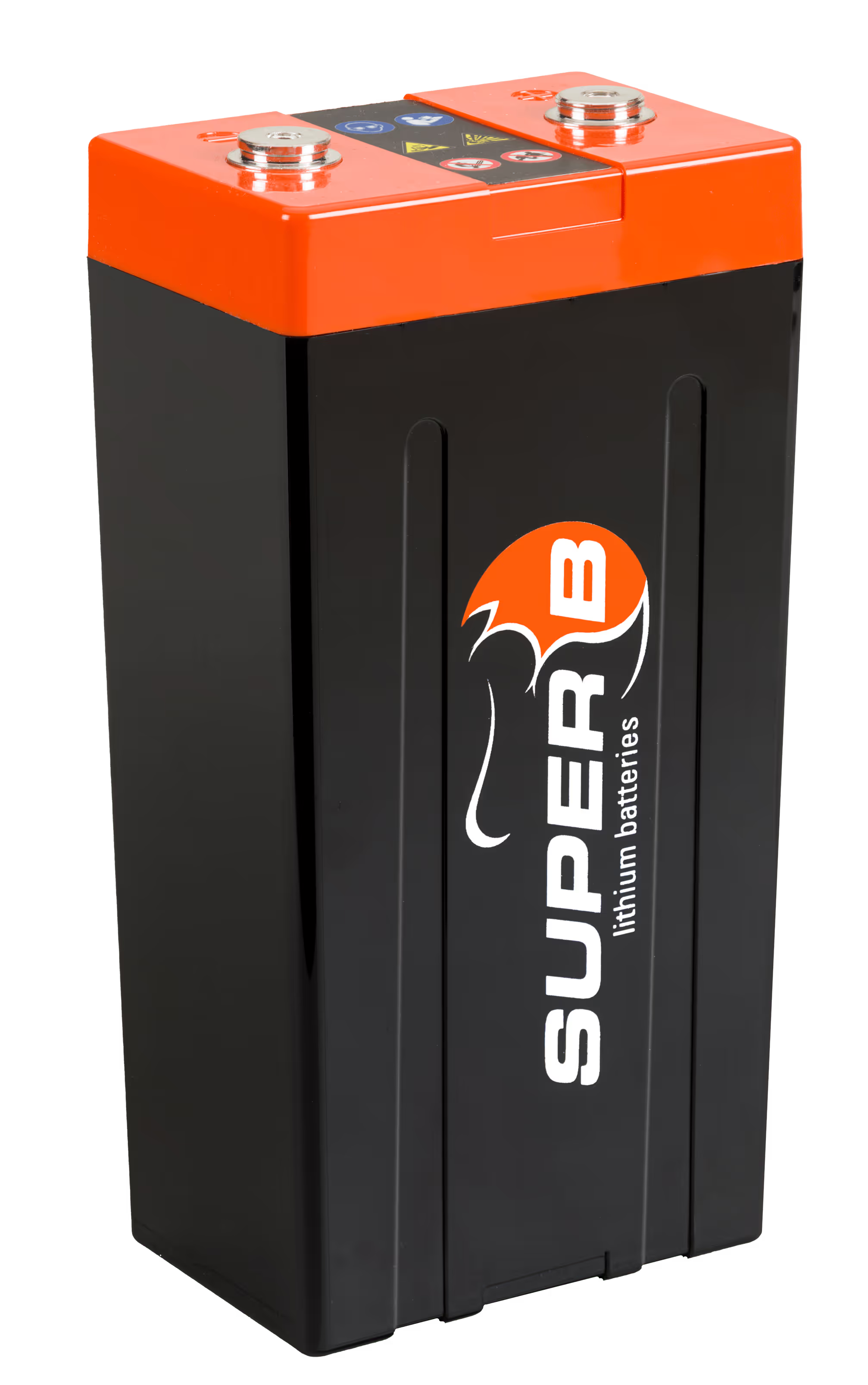
Andrena 12V20Ah
Designed for turbocharged 1.0–1.3 L prototypes and performance SSVs. High cranking power with ample reserve for lights and fans.
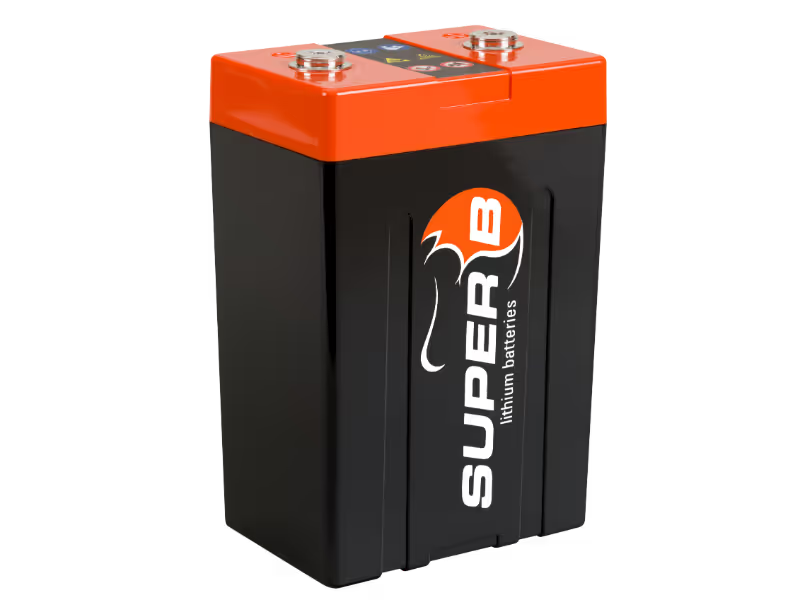
Andrena 12 V 15 Ah
Balanced power and capacity for 2.0–2.5 L GT3 cars. Handles fuel pumps, data loggers and auxiliary systems with ease.
Why Lithium Outperforms AGM in GT3 Racing
Buy nowIn GT3 racing, every component must deliver high performance and reliability under extreme conditions. Traditional AGM batteries are dependable, but they are heavy, slower to charge, and lose voltage under sustained loads. Lithium Iron Phosphate (LiFePO₄) batteries provide clear advantages:
- Higher Power Density – Produces more power with less weight, giving a stronger cranking pulse and sustained voltage.
- Stable Voltage – Maintains consistent voltage as the battery discharges, ensuring sensitive electronics get the power they need throughout the race.
- Rapid Charge Acceptance – Can absorb high charging currents, allowing quick top‑ups between sessions or during pit stops.
- Long Lifespan – Offers thousands of cycles, significantly outlasting traditional batteries and reducing replacement frequency.
- Excellent Thermal Stability – Operates from −20 °C to +60 °C without performance loss, essential for hot engine bays and cold morning starts.
- Non‑Spillable & Safe – LiFePO₄ chemistry doesn’t leak or off‑gas, and many models include built‑in protection to prevent over‑charge or deep discharge.
Trusted by professional GT3 teams
✓ Proven in GT World Challenge and national GT3 championships
✓ Endorsed by race engineers for weight savings and fast recharge times
✓ Demonstrated reliability under high vibration and extreme temperatures
✓ Keeps electronics and telemetry running with zero voltage sag

“After switching to a lightweight GT3 battery, we shaved over 20kg off the nose of the car. Starts are instant, voltage remains stable through long stints, and recharge takes minutes instead of hours. It’s one of the best upgrades we’ve made.”
GT3 Race Engineer

Certifications & Warranty
✓ Made in Europe (Netherlands)
✓ ISO 9001 Certified
✓ Safe LiFePO₄ / Li-ion Chemistry
✓ UN38.3 Transport Approved
✓ Reinforced enduro-grade casings
✓ 3-Year Manufacturer Warranty
Why Choose Our Batteries?
Our GT3 batteries are designed and manufactured in Europe with premium LiFePO₄ cells, robust cases and precision assembly. Each battery undergoes rigorous testing for vibration, temperature resistance, and electrical performance. We back our products with multi‑year warranties and support from specialists who understand GT3 racing. With our batteries, you gain confidence in your power source and keep your attention on driving fast and finishing strong.
Trusted by drivers who refuse to carry unnecessary weight or accept inconsistent support.
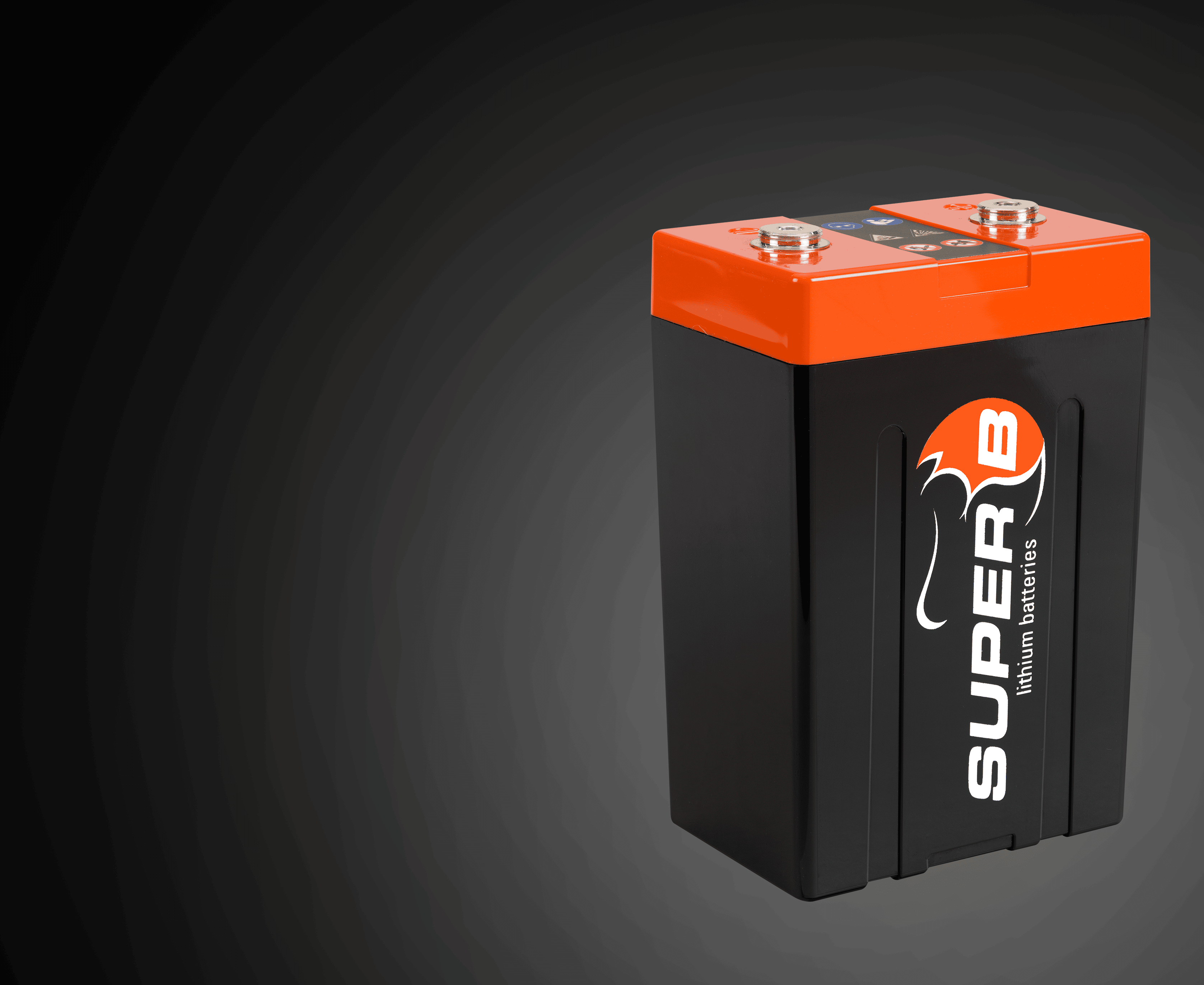
Maximum performance and minimal weight. Designed for racers who want pure cranking power with no built‑in BMS. Use with a compatible charger and monitoring routine for optimal performance.

Includes an integrated Battery Management System for cell protection and balancing. Slightly heavier but ideal for rally raids and long‑distance events where safety and deep-cycle resilience are paramount.
Need Help Finding Your Battery?
Need help choosing your GT3 battery? Use our configurator to select by engine size, accessory load and race format. Our support team provides:
- Recommendations on cranking current and capacity
- Tips on battery relocation for better weight distribution
- Advice on safe mounting and wiring
- Guidance on chargers and maintenance practices
In‑Depth Guide: GT3 Batteries
Introduction: Why Battery Choice Matters in GT3 Racing
GT3 cars are high‑performance machines built to compete in the world’s most prestigious sports car championships. To extract maximum performance, you need a battery that delivers instant power, survives harsh track conditions and contributes to optimal weight distribution. Standard batteries weigh too much, charge slowly, and lose voltage under the sustained loads of modern GT3 cars. Upgrading to a GT3‑specific lithium battery is a strategic move that unlocks speed and reliability.
Power & Cranking Requirements
GT3 engines—usually 4.0–5.2 L naturally aspirated or smaller turbocharged units—require high cranking amps to fire quickly, particularly during hot restarts. Lithium batteries provide 800 – 1500 A cranking pulses, ensuring rapid starts in the pit lane and after stalled engine incidents. This strong pulse, combined with a flat voltage curve, supports ignition and keeps pumps and fans running at full strength.
Weight Reduction & Handling Benefits
Weight is a critical factor in motorsport. Removing 15–20 kg from the front of a GT3 car noticeably improves turn‑in, braking and tyre wear. Lithium batteries weigh a fraction of their AGM counterparts while delivering equivalent or greater power. They also allow teams to relocate the battery lower and further back for better balance. This improves overall vehicle dynamics, helping the car stay planted through corners and respond more predictably to driver inputs.
Reserve Capacity & Electrical Loads
Modern GT3 cars run extensive electronics: ECUs, data loggers, fuel and oil pumps, power steering, ABS, traction control, radios and cooling fans. During safety car periods or pit stops, the battery must supply all these systems without dropping voltage. Lithium batteries offer more usable capacity due to their deep discharge capability and flat voltage profile. Even when heavily loaded, they maintain the voltage necessary to keep systems running flawlessly.
Vibration & Shock Resistance
GT3 cars endure high G‑forces, heavy kerb strikes and continuous vibration. Traditional batteries with internal plates can suffer damage and lose power. Lithium cells are solid and housed in impact‑resistant cases, providing exceptional vibration resistance. This design prevents internal component failure, ensuring that the battery remains reliable over a full race distance and across multiple seasons.
Fast Charging & Maintenance
Pit strategies in endurance races hinge on speed. Lithium batteries recharge quickly—often to 80 % or more in less than an hour—saving crucial time. Their low self‑discharge means you can store the car between races without worrying about a flat battery. To get the most from a lithium battery, use a compatible charger or one with a LiFePO₄ setting, avoid fully draining the battery, and keep it between 50–70 % charge during long storage.
Safety & Integrated Protection
LiFePO₄ chemistry is stable and non‑flammable, but proper management is vital. Batteries with an integrated Battery Management System (BMS) monitor cell voltages, balance cells during charging, and cut off power if conditions become unsafe. Teams seeking maximum weight reduction can choose batteries without a BMS, but they must use lithium‑specific chargers and monitor voltage manually. Regardless of model, ensure the battery is mounted securely, with insulated terminals and compliant with racing regulations.
Selecting Your GT3 Battery
When choosing a battery:
- Engine Size – Larger engines and those running high compression or forced induction need higher cranking amps.
- Electrical Load – Calculate the combined draw of fuel pumps, power steering, fans, coolers and electronics. Choose capacity that supports this load for the longest stint.
- Race Format – Sprint races may use 10–15 Ah batteries; endurance races usually demand 20–25 Ah for additional reserve.
- Weight vs. Safety – Decide whether an integrated BMS fits your needs or if you prefer a lighter, manual‑management option.
- Mounting & Regulations – Ensure the battery fits within the allocated space and meets governing body requirements for isolation and mounting.
By considering these factors, you’ll select a battery that supports your car’s performance and reliability, helping you achieve better results on track.
Frequently asked questions
Some frequently asked questions regarding lithium batteries.
Cranking requirements vary by engine size and tuning. Most GT3 cars need between 800 A and 1500 A. Choose a battery with at least 20 % more cranking capacity than your engine’s minimum.
Lithium batteries are far lighter, charge faster, provide stable voltage and last significantly longer. They also allow deeper discharge without damage.
A Battery Management System adds safety and cell balancing. It’s recommended for endurance events and plug‑and‑play convenience. Teams targeting minimal weight may prefer BMS‑free batteries but must manage charging carefully.
With correct use and charging, expect 5–10 years of service and thousands of cycles—often twice to three times longer than AGM equivalents.
Use a charger with a LiFePO₄ setting or one approved by the battery manufacturer. Conventional lead‑acid chargers can over‑charge or damage lithium cells.
Yes. LiFePO₄ chemistry is intrinsically stable and, combined with robust cases, eliminates risks of leakage or fire. Batteries with BMS further enhance safety.
Yes. Mounting the battery low and towards the centre of the car improves weight distribution. Secure mounting and proper insulation are essential for safety and reliability.
Disconnect the battery, charge it to 50–70 % and store it in a cool, dry place. Check voltage periodically and top up if it drops below manufacturer‑recommended levels.
Removing 15–20 kg allows you to fine‑tune ballast placement. You may need to adjust suspension or ballast to account for the lower weight.
Teams sometimes use smaller batteries for short qualifying sessions to save weight. Ensure the battery has adequate cranking power and capacity for your session length and any potential delays.
Ready to Unlock More Speed?
Legal Notice: Super B starter batteries are designed for motorsport and competition use only. These batteries are not approved for use on public roads. Always consult with Super B or an authorized dealer regarding proper application for circuit racing and motorsport use.


