
Endurance Batteries
Ultra‑light, race‑ready power. Designed for 6‑hour, 12‑hour and 24‑hour motorsport events.

Why Standard Batteries Fail in Endurance Racing
Endurance racing pushes everything to the limit. Conventional lead‑acid batteries are heavy, slow to recharge and lose voltage after repeated restarts. They overheat, struggle with prolonged vibration and can’t handle the constant electrical loads of pumps, telemetry and cooling fans for hours on end. When every second counts, a sluggish battery means longer pit stops, unreliable restarts and lost laps. Upgrading to a dedicated endurance battery eliminates these weak points.
Built for the Ultimate Test

Exceptional Cranking Power
Rapidly turns over high‑compression engines for quick restarts, even after hours of racing.

Lightweight Construction
Up to 80 % lighter than lead‑acid batteries, improving acceleration, braking and overall handling.

Rapid Recharging
Recharge to full in as little as 25 minutes during pit stops, minimising downtime and keeping you on track.

Consistent Voltage Output
LiFePO₄ chemistry delivers steady voltage for ECUs, telemetry and power steering—no voltage sag under load.

Multi‑Year Warranty
Peace of mind with a three‑year manufacturer warranty and technical support from racing specialists.

Vibration & Heat Resistant
PC‑ABS casings with IP‑rated sealing withstand extreme vibration, dust and water. Designed for the heat of engine bays and the pounding of rough circuits.

Low Self‑Discharge
Less than 3 % per month ensures your battery holds charge between sessions and off‑season storage.

Safe & Reliable
LiFePO₄ is one of the safest lithium chemistries. Integrated BMS (on select models) balances cells and protects against over‑charge and over‑discharge.
Why Super B for starter batteries?
Super B has two decades of experience engineering lithium batteries for motorsport. Our batteries are designed and manufactured in the Netherlands to rigorous standards, combining lightweight design with high cranking power, fast recharge times and comprehensive safety features. We collaborate with race teams to refine our products and provide full support from selection through installation and maintenance. Each battery comes with a 3‑year warranty and is backed by a team of specialists who understand the demands of endurance racing.
Trusted by riders who refuse to carry unnecessary weight or accept inconsistent support.
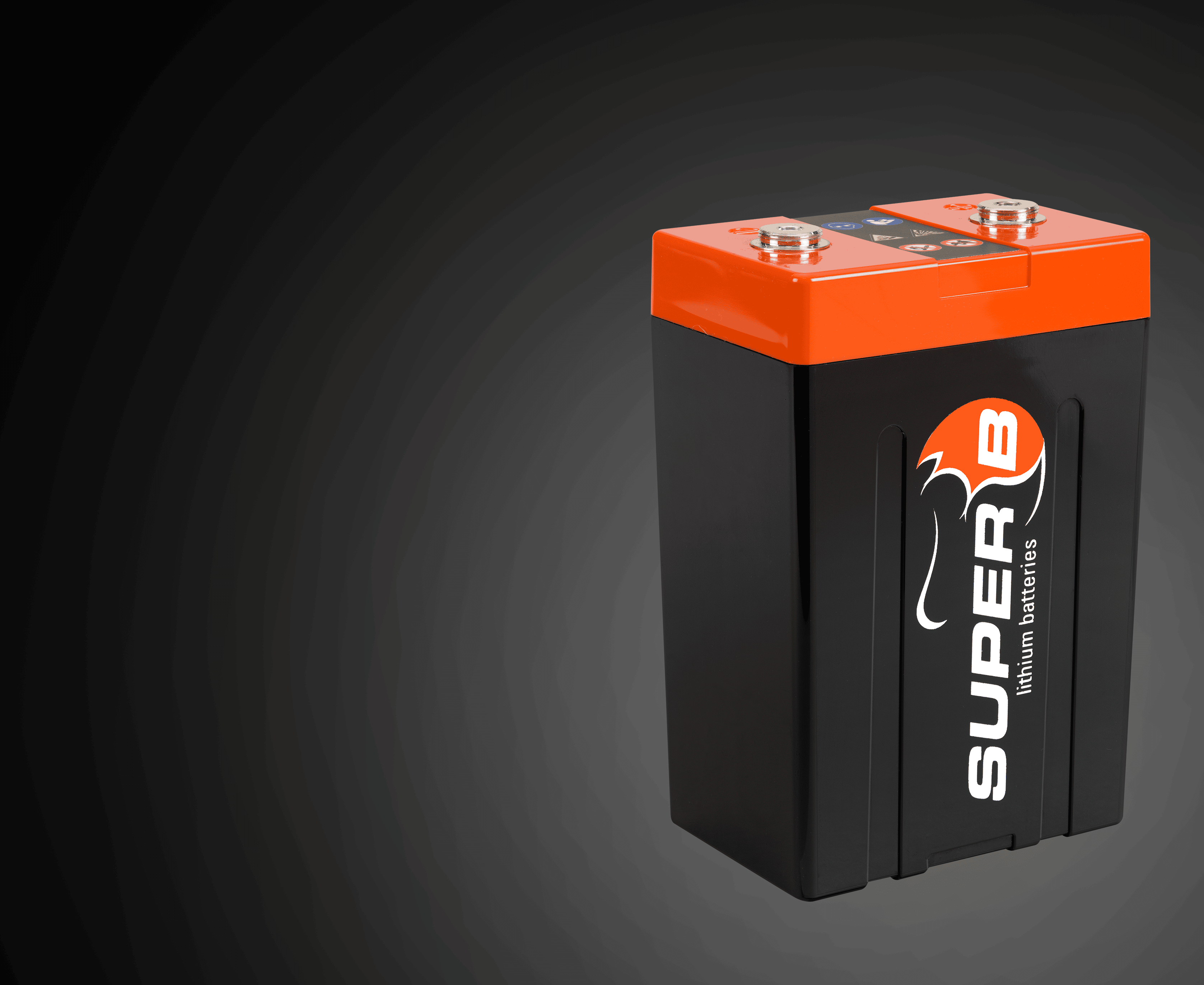
Pure performance and minimal weight. These batteries offer maximum cranking power with no integrated BMS, saving grams where it counts. Ideal for race teams using dedicated chargers and monitoring equipment.

All‑in‑one safety and reliability. Includes an integrated BMS for cell balancing, over‑charge and over‑discharge protection. Perfect for teams seeking a plug‑and‑play solution with added peace of mind.
The Right Battery for Your Endurance Machine
Buy nowEndurance events run for hours, sometimes around the clock. A racing battery in this environment must do far more than start the engine once. It needs to provide continuous, stable power for electronics, survive relentless vibration and rapid temperature swings, and recharge quickly during brief pit stops.
Battery Chemistries
- Lead‑Acid: Affordable but heavy and prone to voltage drop. Not ideal for endurance due to limited cycle life and slow recharge.
- AGM: Maintenance‑free and more vibration‑resistant than flooded lead‑acid, but still heavier and less robust than lithium.
- NiMH: Lighter than lead‑acid, but lower energy density and slower recharge compared to lithium.
- LiFePO₄ (Lithium Iron Phosphate): Highest power‑to‑weight ratio, fast charging, consistent voltage under load and the longest cycle life. It’s the preferred chemistry for endurance racing.
Key Features to Consider
- Weight: A lighter battery lowers overall vehicle mass, improving acceleration, braking and tyre wear.
- Cranking Amps (CCA): Higher CCA provides quick engine starts, crucial for recovering from stalls and pit stops.
- Capacity: Sufficient amp‑hours ensure the battery powers ignition, pumps, fans, radios and telemetry for long stints.
- Recharge Rate: Quick recharge is vital during endurance pit stops. LiFePO₄ cells accept high charging currents without damage.
- Durability: Racing batteries must handle constant vibration, shock and heat. Look for IP ratings and reinforced cases.
- Safety: A reliable battery is essential for preventing electrical failures or fires. Choose batteries with a safe chemistry and built‑in protections.
Why LiFePO₄ Batteries Excel
Lithium Iron Phosphate packs combine high power output and extreme lightness with robust safety. They retain up to 80 % of their capacity after thousands of cycles, can be discharged deeply, and support fast charging without thermal runaway. The integrated Battery Management System (on models like Mason) balances cells and prevents over‑charging or over‑discharging. Thanks to their minimal self‑discharge, they hold charge between races and during off‑season storage.
Trusted Performance in Motorsport and Marine Applications
Race‑proven performance in endurance championships:
✓ Used by GT3, touring car and prototype teams in 6‑hour, 12‑hour and 24‑hour events
✓ Endorsed by top kart, motorcycle and rally teams for reliability under continuous vibration
✓ Integrated with leading Power Distribution Modules (PDMs) for consistent voltage to critical systems
✓ Tested in extreme environments—from heat‑soaked engine bays to rain‑soaked circuits

“At a 24‑hour race, our old battery struggled to hold voltage for the cooling fans. Since switching to a Super B endurance battery, voltage remains constant and our pit stops are faster thanks to quick recharging. The weight savings helped balance the car and improved tyre wear.”
Endurance Racing Team Manager

Certifications & Warranty
✓ Made in Europe (Netherlands)
✓ ISO 9001 Certified
✓ Safe LiFePO₄ / Li-ion Chemistry
✓ UN38.3 Transport Approved
✓ Reinforced enduro-grade casings
✓ 3-Year Manufacturer Warranty
Need Help Finding Your Battery?
Not sure which endurance battery fits your vehicle? Use our configurator to match your make, model and engine size. Our technical team can advise on:
- Required CCA and capacity for your engine and electrical system
- Mounting and fitment in race chassis
- Charging equipment and PDM compatibility
- Best practices for storage and battery rotation during long events
In-Depth Guide: Batteries for Endurance Racing
What Is Endurance Racing?
Endurance racing is a form of motorsport where teams cover as much distance as possible over a set time (often 3, 6, 12 or 24 hours) or complete a fixed distance as quickly as possible. Races like the 24 Hours of Le Mans, 12 Hours of Sebring and Nürburgring 24 Hours test not only driver skill but also the durability of equipment. Cars and motorcycles run continuously with driver changes, pit stops and constant mechanical strain. In this environment, the battery is a critical component of overall reliability.
Dual Role of the Battery in Racing
Unlike road cars, racing vehicles rely on the battery for more than just starting the engine. Modern race cars have complex electronics: engine control units, data loggers, radios, power steering pumps, fans, fuel pumps and lighting. In endurance racing, these systems draw current continuously for hours. The battery must supply consistent voltage without overheating or sagging while still delivering high cranking power for quick restarts after pit stops or stalls. A weak or inadequate battery can result in misfires, loss of telemetry, power steering failure or even retirement from the race.
Why Weight Matters in Endurance Racing
Weight influences every aspect of a racing car’s dynamics. A lighter battery reduces overall mass and lowers the centre of gravity. This translates into better acceleration, shorter braking distances, more predictable tyre wear and easier setup changes. In endurance racing, small gains accumulate over many laps and hours, making weight savings from a lithium battery a smart investment. A typical LiFePO₄ racing battery weighs one‑third to one‑quarter of a conventional lead‑acid battery, offering weight savings between 3 kg and 30 kg depending on the application.
Power Density and Consistent Voltage
High power density means a battery can deliver more current without voltage sag. Endurance racing demands the ability to sustain power output over long stints. Lithium batteries maintain a flat discharge curve, ensuring that voltage stays stable under load. This stability is crucial for sensitive electronics and ensures that fuel pumps and cooling fans continue to operate efficiently late into the race. Lead‑acid batteries typically show a declining voltage profile, which can result in weaker ignition and reduced performance.
Recharge Time and Pit Strategy
Rapid recharge capability gives teams more flexibility in pit strategy. Lithium endurance batteries can recharge fully in as little as 25 minutes using high‑current chargers. This allows teams to rotate between two batteries or top off a single battery during fuel stops without compromising race time. Fast charging also reduces the need to carry large battery banks. Lead‑acid batteries, by contrast, require longer to absorb a full charge and cannot accept high currents without risking damage.
Durability: Heat, Vibration and Shock
Endurance races subject vehicles to extreme conditions. Long runs at full throttle generate intense heat. Vibration from uneven surfaces and kerbs stresses battery internals. Accidents and off‑track excursions subject batteries to shock loads. LiFePO₄ batteries are more tolerant of heat and can operate safely up to 60 °C. Their internal construction—rigid cells encased in shock‑absorbing material—resists mechanical fatigue. Many racing batteries use rugged PC‑ABS or carbon‑composite cases with IP‑rated sealing against water and dust. These features ensure reliable operation from start to finish.
Battery Management & Safety
While LiFePO₄ chemistry is inherently stable, proper management remains essential. Batteries with integrated BMS monitor cell voltages, temperature and overall health. The BMS balances cells during charging, prevents over‑charging or over‑discharging and disables the battery in unsafe conditions. Racing teams that opt for BMS‑free batteries (to save weight) must use lithium‑specific chargers and monitoring systems to avoid cell imbalance. Regardless of the configuration, following the manufacturer’s charging and storage guidelines is crucial for safety and longevity.
Storage, Maintenance and Rotation
Endurance batteries perform best when properly maintained. Store lithium batteries at 50–70 % state of charge in a cool, dry place (10 °C–25 °C). Avoid exposing them to extreme heat or freezing temperatures when not in use. During long events, rotating two identical batteries allows each to cool down and rest between stints, reducing thermal stress and extending life. Check connections and mounting hardware regularly—vibration can loosen terminals and cause intermittent power loss.
Selecting the Correct Battery
Choosing the right endurance battery involves balancing engine size, electrical demand, weight and budget. Lower‑capacity batteries (5–7.5 Ah) suit motorcycles, karts and smaller engines. Mid‑range units (10–15 Ah) are appropriate for single‑seaters, formula cars and cars up to about 1800 cc. High‑capacity packs (20–25 Ah) serve GT cars, touring cars and rally cars with larger engines and higher accessory loads. Consider CCA requirements (at least 20–30 % above the minimum), targeted race duration and environmental conditions. Investing in a quality battery pays dividends in performance and reliability.
Frequently asked questions
Some frequently asked questions regarding lithium batteries.
Endurance batteries are designed to provide continuous power over hours while delivering high cranking amps. They combine high energy capacity, fast recharge rates and vibration resistance, whereas regular racing batteries might focus only on quick cranking for sprint events.
This depends on many variables. A BMS adds cell balancing and protects against misuse. Some teams choose BMS‑free batteries to save weight, but they must use dedicated chargers and monitor cell voltages manually.
High‑quality LiFePO₄ batteries typically provide 2 000–3 000 cycles under racing conditions, lasting several seasons if properly cared for.
Ordinary automotive batteries are too heavy and not designed for repeated deep cycling. Racing batteries are lighter, more durable and better suited to high‑current, high‑vibration environments.
Store at partial charge in a cool place, use a lithium‑compatible charger, avoid full discharge, check terminal tightness regularly and keep the battery away from extreme heat sources.
Yes, as long as the battery’s capacity matches your draw. Consider a battery with sufficient amp‑hours for all electrical loads during the longest stint without alternator charging.
Quality LiFePO₄ batteries have high thermal thresholds and may temporarily shut down via BMS if temperatures exceed safe limits. Proper cooling and placement help avoid overheating.
LiFePO₄ chemistry is stable and non‑flammable. Rugged casings and BMS protections reduce the risk of thermal runaway. Always mount batteries securely and use recommended mounts to minimise impact damage.
Check your engine’s minimum cranking requirement and choose a battery with at least a 20–30 % margin to account for temperature, wear and accessory load. Manufacturers provide CCA ratings—pick one that exceeds the worst‑case demand.
Absolutely. Compact LiFePO₄ batteries (5 Ah and 7.5 Ah) are perfect for endurance motorcycles and endurance karting, providing strong starts and stable voltage for onboard electronics without adding weight.
Ready to Upgrade Your vehicle?
Legal Notice: Super B starter batteries are designed for motorsport and competition use only. These batteries are not approved for use on public roads. Always consult with Super B or an authorized dealer regarding proper application for circuit racing and motorsport use.


